
Quality first
Careful seed selection and disciplined processing sit at the centre of every bottle — the same measured approach we have followed since 1986.
अच्छा खाओ, अच्छा खिलाओ
Good Oil for Good Health · Since 1986
The Monika Difference
Purity, for us, means the food should taste of what it came from — after careful processing and clean packing. Since 1986, from our presses to kitchens across India, that is the difference.
Careful seed selection and disciplined processing sit at the centre of every bottle — the same measured approach we have followed since 1986.
Cleanliness is treated as a manufacturing standard, not an afterthought. Orderly lines keep flavour true to the seed.
Bottle integrity, cap seal, and batch identity help every litre travel safely from mill to pantry.
Whether it is tadka, pickle, or everyday sabzi, the range is built for real Indian cooking — aroma first, consistency next.
Clear product stories over short-term claims. We speak seed lot, aroma, and packing — food language families understand.
Our promise on every pack
The lion mark
The unmistakable mark of Monika’s authenticity. Every genuine Monika pack carries the Lion — a symbol of our commitment to purity, quality, and trust. When choosing Monika, look for the Lion to recognise the original.
From our mills to kirana shelves across the country — distributors, dealers and home delivery carry Monika to every corner.
Proudly Indian since 1986
An Indian family business since 1986. Indian seed, Indian presses, Indian hands — every pack supports local farmers and workers.
Why Monika
We supply only the products we would put on our own table. That has been the motto since 1986, and every brand in the family follows it.
Edible oils, kitchen foods and more — one trusted house for the everyday needs of Indian kitchens, so homes and shops can buy everything from one place.
Experienced teams and strong tie-ups deliver every product in the shortest time, at the best quotation in the trade — whether it is one carton or a full load.
Distributors, dealers and home delivery carry Monika to kitchens and kirana shelves nationwide. Wherever you are, a Monika pack is close by.
Every genuine Monika pack carries the Lion — the quickest way to recognise the original on a crowded shelf and a promise of purity, quality and trust.
From a ½ litre bottle to 15 kg tins, single packs or full cartons — sized for one home, a dhaba, a sweet shop or a whole business.
A simple path from the field to your kadhai, with attention at every stage.
Monika oil guide
Every oil in the Monika family is pressed or refined for a different job on the stove. Here is how they compare — how each is made, how it tastes, how much heat it takes, and where it does its best work.
| Oil | How it's made | Taste & aroma | Colour | Smoke point | Best for | Monika brands |
|---|---|---|---|---|---|---|
| Kachi Ghani Mustard Oil | Seed crushed raw in a slow ghani / expeller, first press | Strong, sharp jhaar — high pungency | Deep golden to amber | Approx. 250 °C | Tadka, achaar, fish curry, sarson ka saag, everyday sabzi | Monika Rich Health® |
| Cold Press Mustard Oil | Slow expeller pressing at low temperature | Balanced mustard aroma, milder bite | Natural golden | Approx. 250 °C | Daily sabzi, dal tadka, paratha, chutney | Monika® |
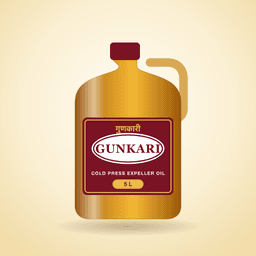
| Cold Press Expeller Oil | Mechanical expeller pressing, filtered | Natural seed aroma | Golden, may haze in winter | As per seed — see pack | Daily cooking, frying, dhaba and kirana use | Avtar, Gunkari |
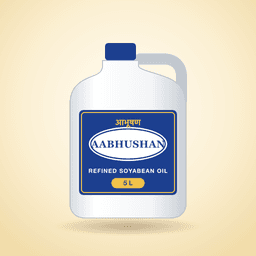
| Refined Soyabean Oil | Pressed, then refined in steps | Neutral — lets the masala lead | Light, clear pale yellow | Approx. 230 °C | Puri, pakora, namkeen, baking, deep frying | Aabhushan |
| Refined Palm Oil | Fruit oil, fully refined | Neutral | Light golden, sets in cold weather | Approx. 230 °C | Long commercial frying runs, namkeen, sweets | Gittar |
Nutrition, side by side
All cooking oils give the same energy — the difference is in the kind of fat. Mustard oil is high in monounsaturated fat and carries natural omega-3, soyabean oil is rich in omega-6, and palm oil holds more saturated fat, which is why it stays stable through long frying.
| Per 100 g | Mustard | Soyabean | Palm |
|---|---|---|---|
| Energy | 884 kcal | 884 kcal | 884 kcal |
| Total fat | 100 g | 100 g | 100 g |
| Saturated fat | 11.6 g | 15.6 g | 49.3 g |
| Monounsaturated fat (MUFA) | 59.2 g | 22.8 g | 37.0 g |
| Polyunsaturated fat (PUFA) | 21.2 g | 57.7 g | 9.3 g |
| Omega-3 (ALA) | 5.9 g | 6.8 g | 0.2 g |
| Omega-6 (linoleic acid) | 15.3 g | 50.9 g | 9.1 g |
| Trans fat | 0 g | 0 g | 0 g |
| Cholesterol | 0 mg | 0 mg | 0 mg |
Kitchen guide
Indian kitchens rarely run on one oil. A sharp mustard oil for tadka and achaar, a neutral oil for the deep kadhai — this is how most of our customers split it.
| Dish | Reach for | Why it works |
|---|---|---|
| Tadka for dal & sabzi | Kachi ghani mustard | Pungency opens up in hot oil and carries the jeera and hing. |
| Achaar (pickle) | Kachi ghani mustard | The sharp oil seals the masala and keeps the pickle tasting fresh through the season. |
| Macchi curry & Bengali cooking | Kachi ghani mustard | The classic flavour base for jhol, shorshe and bhapa dishes. |
| Sarson ka saag & makki roti | Mustard oil | Mustard on mustard — the traditional Punjabi pairing. |
| Paratha & roti | Cold press mustard | Balanced taste that doesn't overpower the atta. |
| Puri, pakora & bhature | Refined soyabean | Neutral, light and steady at deep-frying heat. |
| Namkeen & mithai (bulk) | Refined palm / soyabean | Stable over long frying runs in commercial kadhais. |
| Baking & cakes | Refined soyabean | No aroma of its own, so the bake tastes of butter and vanilla. |
From seed to seal
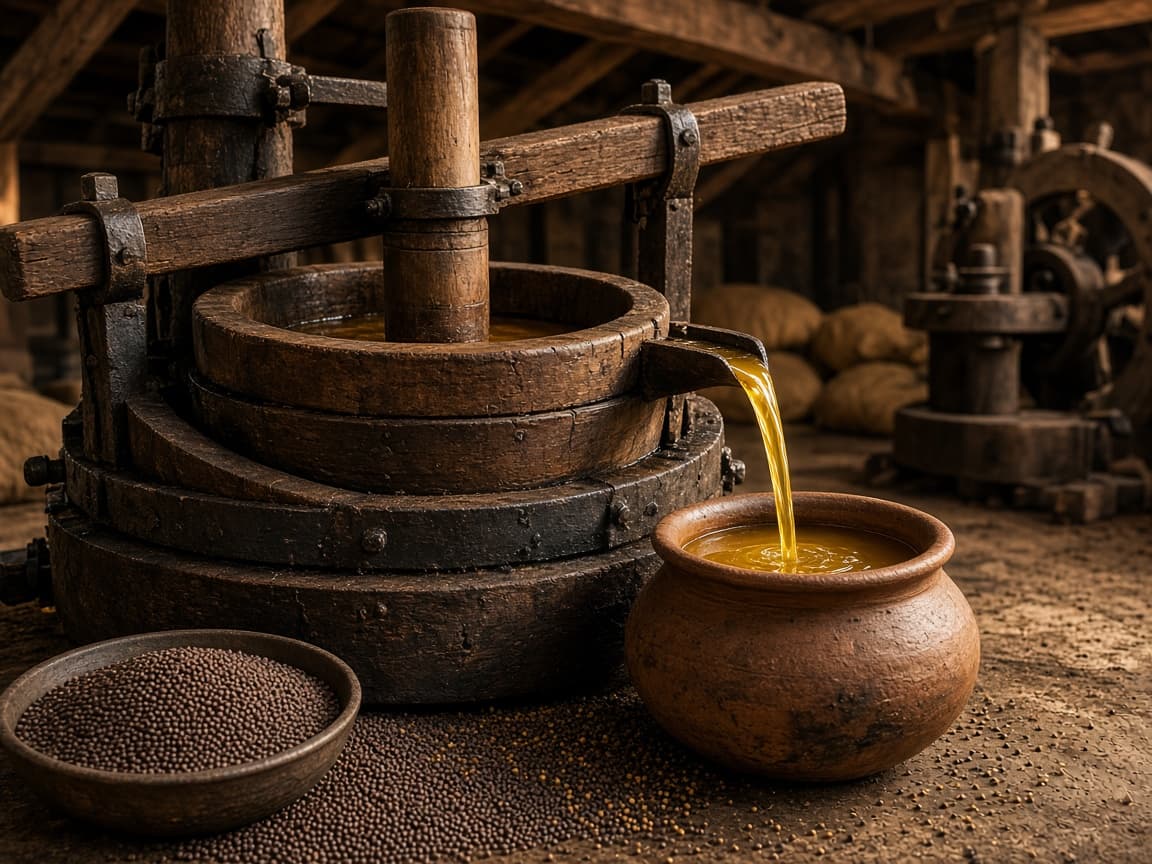
Kachi ghani means the seed goes into the press raw — no roasting, no solvent. It is the slowest way to make mustard oil, and the reason the jhaar is still there when you open the cap.
| Step | What happens | What we check |
|---|---|---|
| Seed selection | Mustard seed is bought by lot and graded for size, colour and oil content. | Moisture, foreign matter, damaged seed |
| Cleaning | Seed is sieved and destoned so only clean seed reaches the press. | Dust, stones, chaff |
| Kachi ghani pressing | Raw seed is crushed slowly; the first press keeps the natural pungency. | Press temperature, oil colour, jhaar |
| Settling & filtration | Fresh oil rests so fine seed particles settle, then is filtered clear. | Clarity, sediment |
| Filling & sealing | Oil is filled into bottles, jars, tins and buckets and sealed. | Fill level, cap seal, batch and date on pack |
| Nothing wasted | The pressed seed cake (khal) goes to cattle and poultry feed as a protein source. | — |
Refined oils
Refined oils go through extra steps after pressing so they turn out light, clear and neutral — built for high heat and long frying.
Now available in 6 pack sizes
Bottles, jars, tins and buckets: 31 pack options across the Monika range, so you buy exactly as much as you cook. Bigger packs cost less per litre.
Since 1986